A potential next-generation treatment for diabetic retinopathy
2nd April, 2026
Read more6th November, 2025
Cataract surgery is currently the only treatment available for cataracts. The procedure restores your vision, and many patients actually see better than they did before they developed cataracts. Let’s delve into how long different stages take and what you can expect.
Cataract surgery is a common procedure that entails removing the cloudy lens and replacing it with a new, artificial, clear lens (called an intraocular lens). Cataract surgeries are usually carried out under a local anaesthetic, either by anaesthetic around the eye or by eye drops. You’ll be awake for the procedure, and you may be able to see some movement around your eye, but you won’t be able to feel a thing. Our Newmedica theatre teams will be there to ensure you feel completely comfortable throughout the surgery.
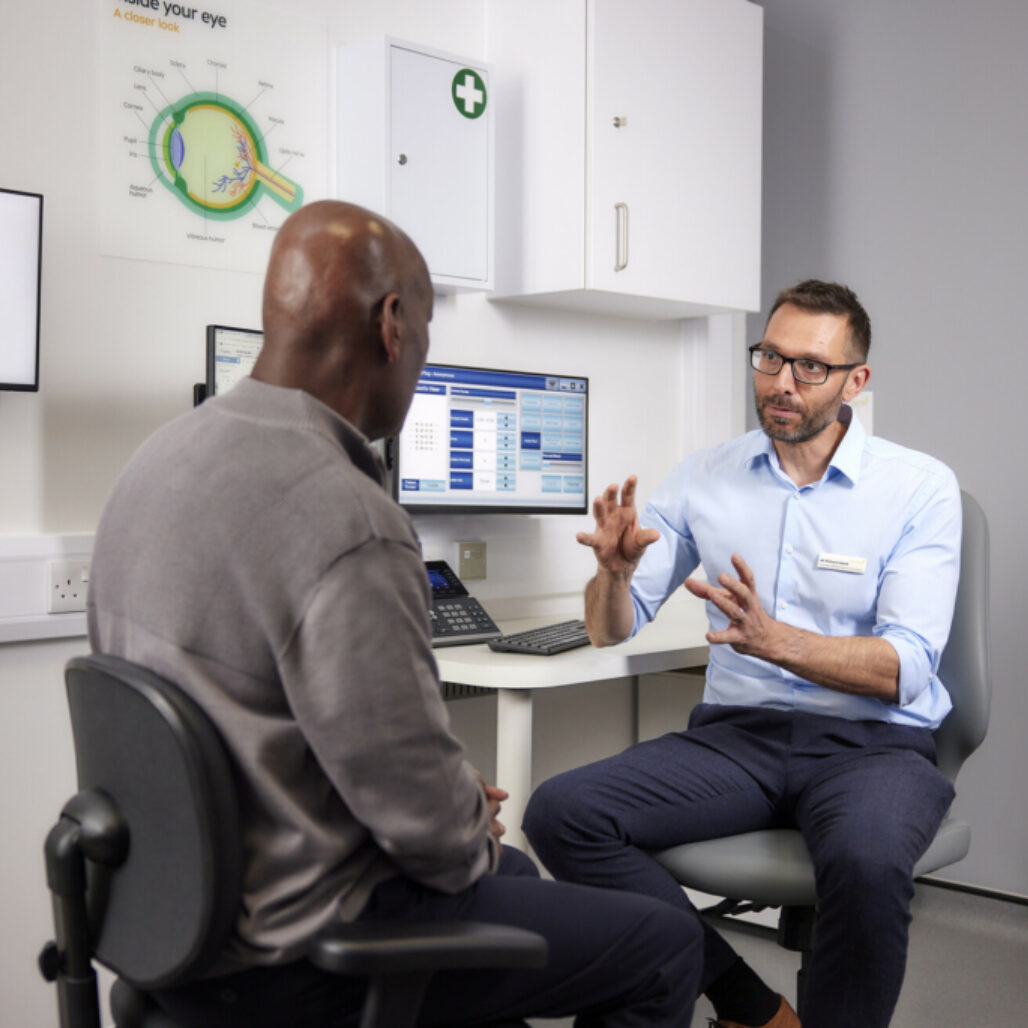
A cataract assessment typically takes between an hour and 2 hours. You’ll be given eye drops to dilate your pupil. An assessment also involves various other steps, like eye examinations and a discussion about your medical and ocular history.
During cataract surgery, your cloudy lens is removed and replaced with a new artificial one. However, there are various techniques used to remove the cloudy lens:
During a phacoemulsification procedure, a small incision is made in the cornea (the very front of your eye). Next, a tiny device is used to transmit high-frequency ultrasound waves, which break the cataract up into small pieces. These fragments are then suctioned out gently, and the artificial lens is put in.
Femtosecond laser-assisted cataract surgery utilises laser technology for some steps of the procedure. This can include creating precise incisions and breaking up the cataract. Please note, we don’t offer this at Newmedica.
Cataract surgery usually takes around 10-20 minutes to complete. This can be longer depending on factors such as the type of cataract and the patient’s eye condition.
If you have cataracts in both of your eyes, then they’ll usually be treated on different days with two separate appointments. It takes around 10-20 minutes on average to complete cataract surgery for one eye.
Expert cataract surgery for NHS and Private patients across England, with the markets high quality lens.
A denser and advanced cataract can lead to surgery taking longer. For example, extracapsular cataract surgery is sometimes carried out when the cataract is advanced and therefore less likely to be broken down through phacoemulsification. During this procedure, an incision is made close to the outer edges of the cornea, and the cataract is then usually removed in one piece. Extracapsular cataract surgery often takes around 30-45 minutes to complete, which is typically longer than phacoemulsification.
Certain factors, like diabetes, prior eye trauma, and having other eye conditions like glaucoma and uveitis, can require additional steps and some parts of the procedure to be carried out at a slower pace.
It’s normal to experience side effects like sticky eyelids, fluid discharge, and itchiness from the treated eye within the first few days after surgery. Mild discomfort can be managed by taking paracetamol as advised. The majority of patients are able to carry on with their daily activities within a few days or a week. However, it’s still important to take things easy, and it’s best not to make plans to be too busy in case your eye feels uncomfortable. Some people notice their vision improving within 24 to 48 hours, while others may see improvements within a few days.
It can take more time for your eyes to fully adjust to your new lens. Full recovery times vary and can take around 4-6 weeks for some patients to completely recover. Coming to one of our clinics for cataract surgery means we’ll arrange the necessary follow-up appointments with your consultant or preferred optician to make sure your cataract recovery is going as it should be.
"cataract surgery was something I was dreading. Mr Bhamy made it easy and reassuring for me. The staff were wonderful, professional and friendly. The outcome was better than I ever expected"
"I recently visited Newmedica, Worcester for an assignment after which they offered me next day surgery as they'd had a cancellation. I found all the staff right from reception to nursing to doctors, were warm, welcoming and excellent, each and every staff member I met at Worcester were absolutely wonderful, from the moment I arrived to the moment they discharged me. I can't recommend them highly enough. The waiting room was pleasant, there was thoughtful touches such as complementary drinks available, the clinic is modern and clean. If anyone needs cataract surgery like I had go to Newmedica Worcester."
At our Newmedica clinics across England, we care for more than 306,000 NHS and private patients a year. We work with local GPs and opticians as well as the NHS to help manage and treat a wide range of advanced eye conditions. We’ll be committed to understanding your needs so that we can provide you with the best possible experience and look after you with total understanding and compassion. Across our clinics, we use the highest quality lenses to achieve the best clinical outcomes, which include some that can reduce your dependence on glasses. When you visit us at one of our Newmedica clinics, we’ll make sure to give you a warm welcome, hold your hand if you’re feeling anxious, and be there for you from your first appointment to your last.