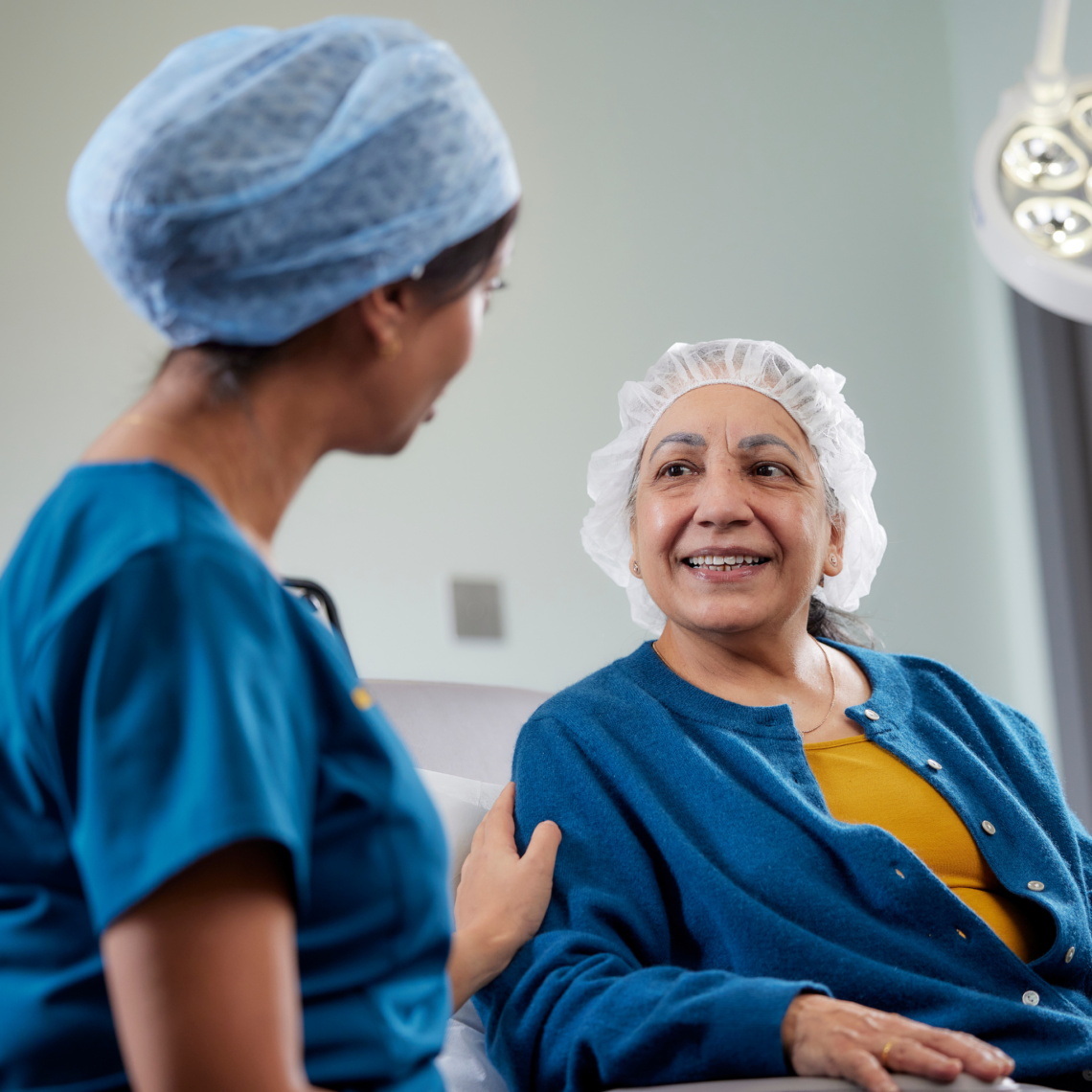
They all spoke to me calmly and explained what would be happening. They were amazing.
Sarah’s story
Helping more patients access NHS cataract treatment
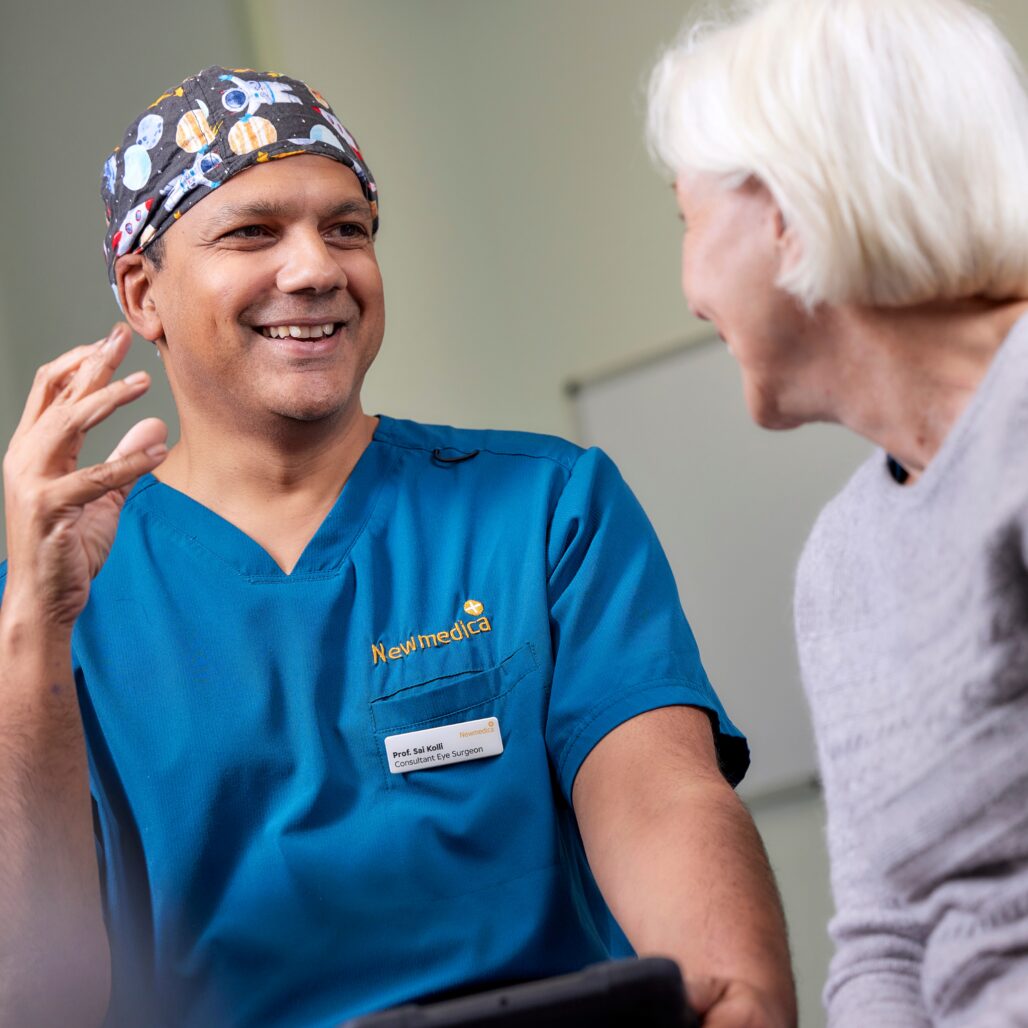
During this procedure, the patient’s cloudy lens (cataract) is removed and replaced with an artificial lens (known as an intraocular lens) to restore clear vision. The standard replacement used on the NHS is called a monofocal lens, which improves vision for a specific distance (like far away or close). Getting NHS cataract treatment means all of your costs will be fully funded by the NHS, with no additional cost to you.
If it’s becoming difficult to see and carry out your usual daily activities, such as driving and reading, cataract surgery can restore clear vision and improve quality of life. Because the surgery is NHS-funded, patients can access this treatment without having to pay.
If your GP or optician suspects or diagnoses you with an eye condition, such as cataracts, they will discuss all of your treatment options and where you can receive NHS care. If you choose Newmedica for your NHS cataract surgery, let them know, and they’ll manage your referral in line with the locally commissioned NHS pathway.
Patients must meet specific NHS thresholds to qualify for NHS-funded cataract surgery. These are usually linked to impact on vision and whether the condition is impacting the patient’s day-to-day life.
Most cataract surgeries are performed under a local anaesthetic, either by eye drops or anaesthetic around the eye (don’t worry, there won’t be any needles). Your consultant will make a very small incision in the eye to remove the cloudy lens and replace it with the artificial intraocular lens. You’ll be awake for the procedure and may see some movement around your eye, but you won’t be able to feel a thing. The procedure usually takes around 10-20 minutes to complete.
Cataract surgery restores clear vision, making it easier to carry out everyday activities. You may also experience improvements in colour perception, brightness, and sharpness.
A monofocal lens (the standard replacement used on the NHS) improves vision for a specific distance. Most people choose to have their monofocal lens set for distance vision, meaning glasses may still be needed for close-up tasks like reading. Likewise, if the lens is set for reading vision, glasses might be required for activities that involve seeing farther away, like driving.
By restoring clear vision, cataract surgery improves quality of life, making daily activities easier to carry out. This can also help to maintain independence and boost overall well-being.
NHS cataract surgery stops your vision from changing any further. Without undergoing the procedure, it’s likely that vision will gradually get worse over time.
Phacoemulsification is the standard procedure used for cataract surgery. It involves making a small incision in the cornea (the very front of your eye), and a tiny ultrasonic device is used to break the cataract into smaller pieces. These are carefully suctioned out, and the new artificial lens is inserted to restore clear vision.
During MICS, the surgeon makes a very tiny incision in the eye, often around 1.8–2.2 millimetres (smaller compared to other types of cataract surgery).A tiny ultrasonic device is then used to break the cataract into smaller pieces, and these are suctioned out gently. The new artificial lens, which is usually foldable so it can fit through the tiny opening, is then inserted to restore clear vision.
If your optician or GP suspects or diagnoses you with cataracts, they’ll talk you through all the treatment options available, as well as where you can choose to receive your NHS cataract treatment. As an NHS patient, you have the legal right to decide which NHS or independent surgical centre, like Newmedica, provides your care when referred for treatment. This means you can choose a provider based on what’s important to you, whether that’s short wait times, proximity to your home, the quality of care provided, or the best replacement lens.
If you’d like to choose Newmedica for your NHS cataract surgery, just let them know, and they’ll make all the arrangements for your referral in line with the locally commissioned NHS pathway.
NHS waiting times vary by location. For Newmedica patients, once we’ve received your referral from your optician or GP, we’ll contact you within a few days to book you an appointment. Depending on the Newmedica clinic you go to, our short waiting times mean you'll have your first appointment within just a couple of weeks.
After surgery, you’ll need to wait for a bit before going home to ensure you’re okay before leaving. You won’t be able to drive, so you’ll need to have a way home arranged. You’ll be told what you’ll need to do to help your eye heal, and you’ll be given eye drops to use for a few weeks. At Newmedica, we’ll call you the next day to check in and make sure everything’s okay.
It’s common to experience some side effects after cataract surgery for a few days to sometimes a few weeks, and you’ll be made aware of these at your appointment. This can include blurred or double vision, sensitivity to light, mild red or gritty eyes, watery eyes, and mild pain. These symptoms should clear up as the eye heals, but if they persist or get worse, especially if accompanied by other symptoms, this could be a sign of a complication. You’ll be told the potential risks and complications so you’re aware of what to look out for. At Newmedica, our patients are given access to an emergency phone number to call if needed.
NHS waiting times vary by location, depending on factors such as hospital capacity and demand. If you’re on an NHS waiting list, you have the right to ask to go to a different hospital or clinic if you’d prefer. This way, you can choose a location with shorter waiting times. Some people also choose private cataract surgery to avoid long waiting times.
Newmedica are a leading provider of NHS-funded and private Ophthalmology services, and care for over 306,000 private and NHS patients a year in more than 30 locations across England. Our modern clinics provide a calm atmosphere, all with the latest equipment and facilities, to give you the best possible experience. From the second you walk through the door, our compassionate team will give you a warm welcome and will be committed to making sure you feel comfortable and cared for during your visit. We have short waiting times, so you’ll have your first appointment within a couple of weeks. Our skilled team provides the highest standard of healthcare and will always take time to answer any questions you have and ensure you stay informed every step of the way.


I can’t fault the service at Newmedica. It was amazing. Everyone was so helpful, the surgery was so quick and efficient.
Joan’s story
Read story

‘I love cooking, and now I can actually see what I’m doing in the kitchen again. Suddenly I’m able to cook my older recipes with the family.
Karen’s story
Read story
I had a first-class experience and can’t praise the team enough. I have worn glasses for a long time but my sight is so clear and sharp.
Allen’s story
Read story