
Glaucoma intrascleral tube surgery (GITS) explained
25th September, 2026
Read more1st July, 2026
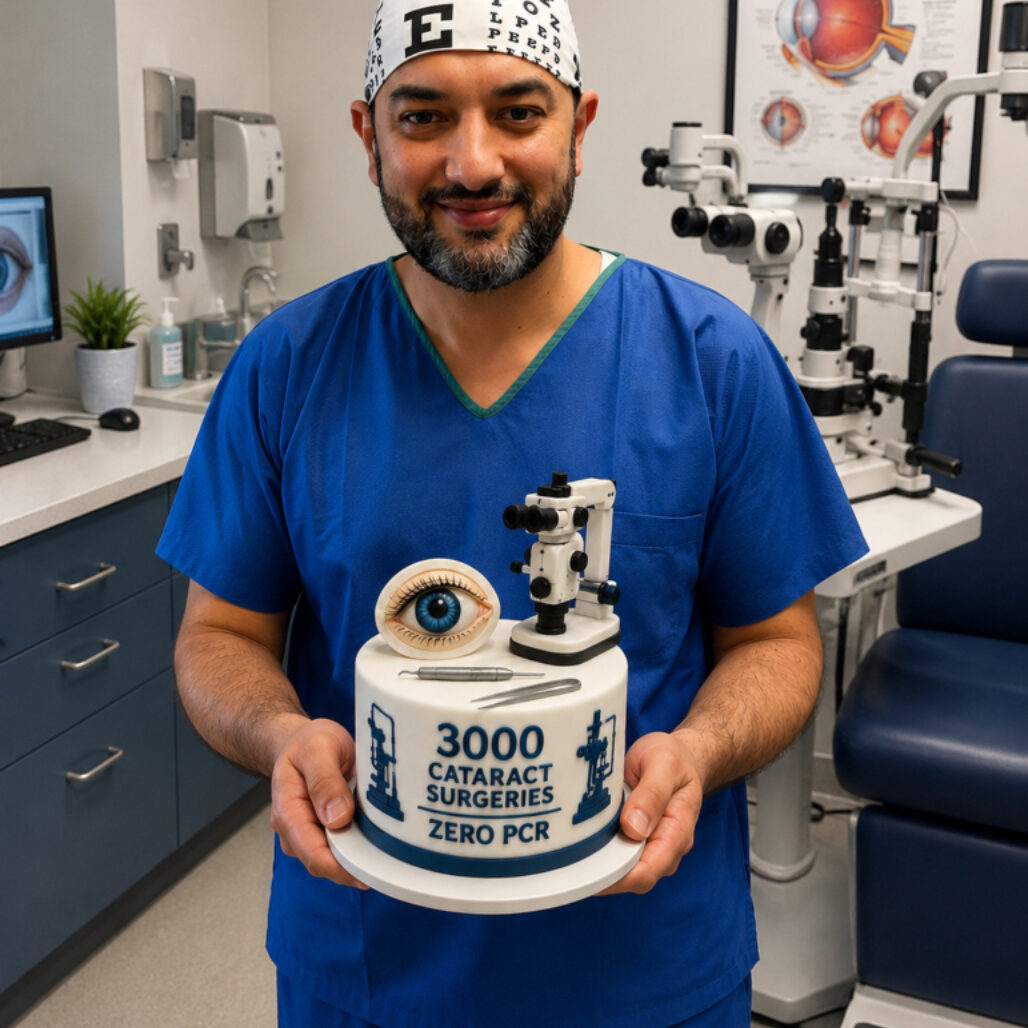
A Newmedica Worcester consultant has completed 3,000 cataract surgeries without posterior capsule rupture (PCR), highlighting surgical quality and excellence in ophthalmology care.
Posterior capsule rupture is an intraoperative risk in cataract surgery. Avoiding it consistently over a large volume reflects technical precision, decision-making discipline and stable operative environments.
Sustained outcomes at this level depend on standardised processes, experienced teams and meticulous planning across pre, intra and post-operative phases.
‘Waleed’s achievement is a remarkable reflection of his skill, focus and commitment to delivering safe care for every patient. Congratulations to him and his colleagues,’ says Nigel Kirkpatrick, medical director of Newmedica.
High surgical consistency reduces complications, improves recovery trajectories and builds trust among referring optometrists and patients navigating cataract surgery pathways.
Reproducibility matters as much as volume. Outcomes are shaped by culture, governance and continuous improvement rather than isolated expertise.
What is posterior capsule rupture (PCR)?
A complication where the back of the lens capsule breaks during surgery.
Why is PCR important?
It can increase surgical complexity and affect recovery outcomes.
How can PCR risk be reduced?
Through surgical training, planning, equipment quality and team coordination.
Cataract surgery: Causes, Symptoms & Treatment


1st July, 2026
Read more